
Ravindra Mehta United States
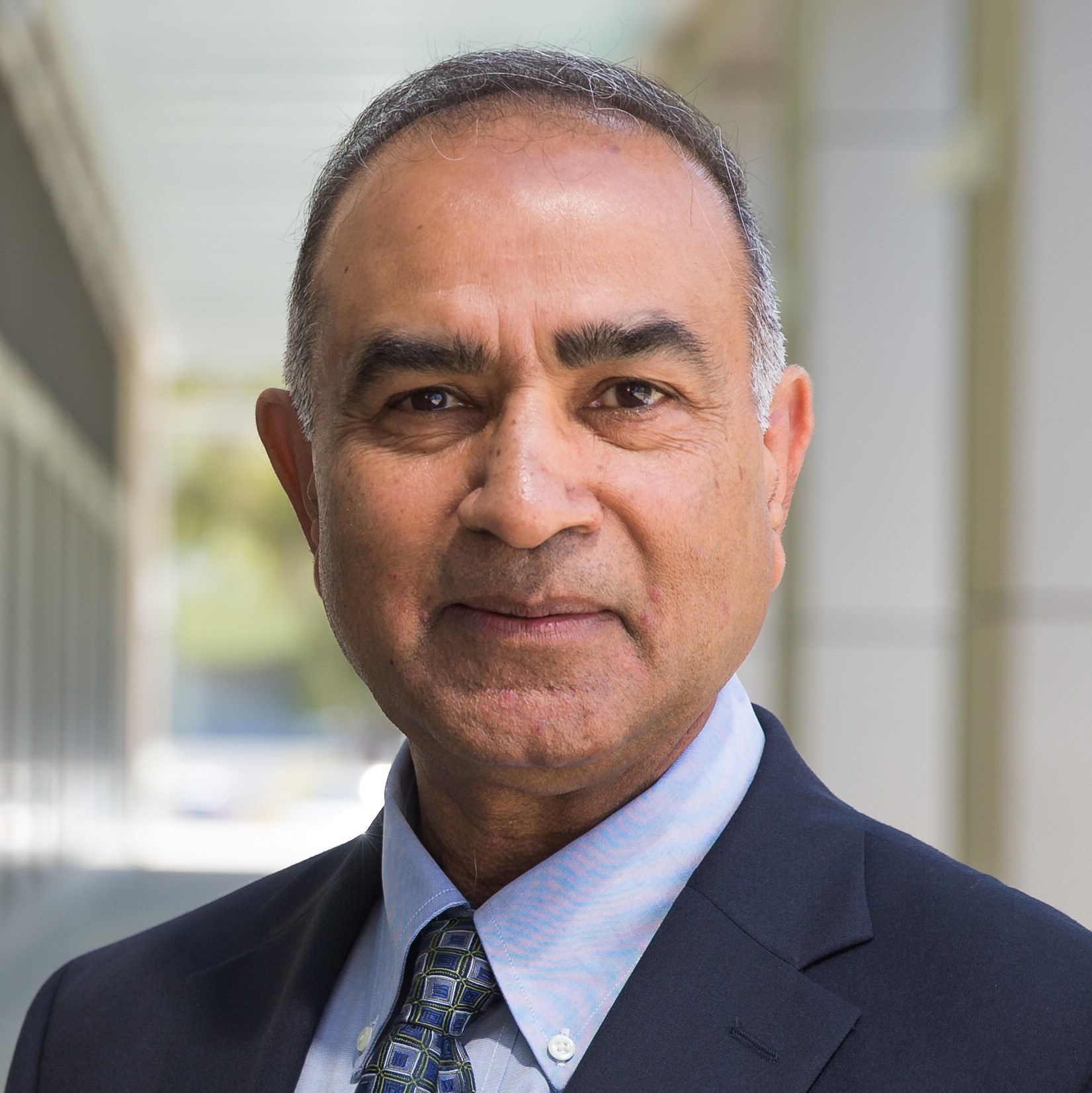
Dr Mehta is a Professor Emeritus of Medicine at University of California San Diego where he directs the UCSD Masters in Clinical Research Program and is the Clinical Core PI of the NIH funded UAB/UCSD O’Brien Center for AKI research. He chairs the annual International AKI and CRRT Conference in San Diego that is in its 31st year in 2026. He is a founding member of the Acute Dialysis Quality Initiative (ADQI) and the Acute Kidney Injury network (AKIN). His research has informed the development of the KDIGO guidelines for AKI. He has spearheaded several innovative multicenter studies on AKI including the International Society of Nephrology (ISN) AKI 0by25 project. He received the ISN Bywaters Award for lifetime achievement in AKI in 2011 and in 2020 the ISN honored him by establishing a fellowship in AKI in his name. He received the M.B.B.S. degree (1976) from the Government Medical School in Amritsar, India, and the M.D. (1979) and D.M. (1981) degrees from the Post Graduate Institute of Medical Education and Research in Chandigarh, India. He obtained his boards in Internal Medicine (1986) and Nephrology (1988) at the University of Rochester in Rochester New York. He has been on the faculty at San Diego since 1988.
18th September 2026 Friday
| Time | Session |
|---|---|
|
08:00
12:30
|
(Pre-Congress Workshop)
Room 101D
|
|
17:10
18:00
|
Room 101AB
|
19th September 2026 Saturday
| Time | Session |
|---|---|
|
08:30
10:15
|
Jay KoynerUnited States
Moderator
Special lecture: 2026 KDIGO AKI Guideline UpdateI will be updating the audience on the major conceptual updates of the 2026 KDIGO AKI Guidelines. I will focus on Chapter 1 and 2, including the evolving definition of AKI/AKD, AKI trajectories, biomarkers, and risk prediction, together with selected key updates from Chapter 4 on nephrotoxin-associated kidney injuryTargeting Persistent AKI and Promoting RecoveryI have been working with my co-moderators to develop a case based presentation looking at the use of biomarkers to predict outcomes in a patient with dialysis requiring AKI. and we will be discussing the intracicies of providing AKI-care to those receiving dialysis and how best to wean patients from dialysis and the long term outpatient managment of these patients
Room 101
|
|
12:40
13:45
|
VinCent WuTaiwan
Moderator
AKD Care Redefined: Diabetes, Hypertension, and Strategies for Long-Term Health Traditional acute kidney injury (AKI) classifications, centered around semi-anatomical lines, no longer suffice in capturing the complexity of AKI. Subphenotyping, enriched with AKI biomarkers, holds insights into distinct risk profiles and tailored treatment strategies, redefining AKI and contributing to improved clinical management (Critical Care). Incorporating kidney biomarkers into strategies for early AKI detection and the initiation of AKI care bundles has shown greater effectiveness than using care bundles without these novel biomarkers. Our investigations have made notable advancements in identifying water-soluble regulatory iron hepcidin as a promising early biomarker for predicting postoperative acute kidney injury. Beyond hepcidin, our research extended into the exploration of predictive biomarkers, such as HJV, NGAL, and cFGF-23, uncovering their potential in prognosticating the occurrence and severity of AKI (Cell Death Dis, Antioxidants & redox signaling). The amalgamation of these biomarkers with existing clinical AKI scores holds immense promise in revolutionizing critical care and ushering in a new era of personalized patient management. Moreover, our endeavors have transcended theoretical advancements, with successful patent acquisition for AKI biomarkers attesting to our commitment. We were the inaugural contributors to the discourse on the effects of indoxyl sulfate on the tubulogenesis capability of endothelial progenitor cells and cell aging in acute kidney injury(Angiogenesis). A comprehensive review of the long-term prognosis of acute kidney injury, encompassing impacts on the heart, brain, bone lesions, gastrointestinal, and tissue carcinogenesis, was presented. (JASN, KI, cJASN, JAHA, ICM, CC). Our team posited that transferring post-AKI patients to nephrologists for care could reduce overall mortality and cardiovascular events (Value in Health). Through integrated analysis, we demonstrated that standard dialysis would increase the number of patients avoiding dialysis (CC), stimulating fervent discussions among AKI physicians at international conferences. Notably, we were global trailblazers in proposing that acute kidney disease, regardless of AKI presence, leads to mortality and end-stage kidney disease(eClinicalMedicine ).
Although the evidence for patients with acute kidney disease (AKD) is still lacking, several potential pharmacological agents may improve outcomes, including but not limited to angiotensin-converting enzyme inhibitors, angiotensin receptor blockers, mineralocorticoid receptor antagonists, sodium-glucose cotransporter 2 inhibitors, and glucagon-like peptide 1 receptor agonists (JAMA NO). In conclusion, accurate prognosis prediction and effective treatment for AKD are critical yet unmet clinical needs. Future studies are urgently needed to improve patient care in this complex and rapidly evolving field.
Room 101
|
20th September 2026 Sunday
| Time | Session |
|---|---|
|
07:30
08:15
|
Timing of Dialysis
Room 103
|
|
08:30
10:15
|
Nattachai SrisawatThailand
Moderator
Precision Sepsis-AKI — Biomarkers, AI and Phenotyping in the Asia-PacificSepsis-associated AKI in the Asia-Pacific carries a burden that global datasets underrepresent. In the SEA-AKI prospective multicentre ICU study, AKI was very common, with stage 3 reaching 28.9%, and infectious disease among the independent risk factors for AKI development. In the InSEA-RRT registry — 2,315 critically ill patients with stage 3 AKI across 24 hospitals in Southeast Asia and India — 47% died during hospitalization, with major adverse kidney events tracked to two years.
These cohorts expose the limits of treating sepsis-AKI as one disease. This lecture examines how damage and stress biomarkers, machine-learning models trained on regional rather than imported data, and sub-phenotyping by trajectory and host response can move us from a single creatinine-based label toward actionable patient groups. Emphasis will be on what is deployable in resource-variable settings, where biomarker access is uneven and registry infrastructure is often the practical starting point for precision medicine.Timing of DialysisWhen to start kidney replacement therapy (KRT) in AKI remains one of the most frequent bedside decisions in critical care, and the trial evidence has settled less than it first appears. ELAIN favoured early initiation, AKIKI and IDEAL-ICU did not, STARRT-AKI showed no survival benefit from an accelerated strategy with more dialysis dependence at 90 days, and AKIKI-2 found that delaying further offered no advantage and may cause harm.
This session works through illustrative cases rather than trial summaries: the patient with rising creatinine but no urgent indication, refractory hyperkalaemia or acidosis demanding immediate treatment, the fluid-overloaded patient with worsening oxygenation, and the diuretic-responsive patient in whom watchful waiting proves correct. Each case is used to separate absolute indications from the discretionary zone where trials apply.
Emphasis will be on practical decision aids — urine output trajectory, furosemide stress testing, fluid balance, and organ-support burden — and on when not starting is the better decision.Acute PD vs Acute HD: Which Is the Right Choice?For AKI requiring kidney replacement therapy outside well-resourced ICUs, the practical question is which modality can be started safely tonight. Acute peritoneal dialysis (PD) needs no vascular access, anticoagulation, water treatment, or machine, but concerns persist about clearance and ultrafiltration control.
Our multicentre randomized trial assigned 157 patients with AKI to lower-dosage acute PD (18–24 L/day) or intermittent hemodialysis three times weekly. Sepsis caused 68% of AKI. Twenty-eight-day mortality was 50% versus 49% (risk difference 0.6%), meeting the prespecified noninferiority margin, with comparable dialysis-free survival and seven-day fluid balance. Complications diverged rather than favoured one modality: intradialytic hypotension was more frequent with hemodialysis, hypokalemia with PD.
This lecture translates these findings into practice — where lower-dosage PD is a legitimate first choice, where it is not, how to prescribe and monitor it, and how modality availability shapes AKI preparedness in resource-limited settings.
Room 101AB
|
|
11:30
12:25
|
Chih-Hsiang ChangTaiwan
Moderator
重塑生命韌性:從 ICU 治療到回歸社會的康復之路急性腎損傷的照護目標不應止於 ICU 存活或成功脫離連續性腎臟替代治療(CRRT),而應延伸至腎功能恢復、身體功能重建與重返家庭及社會。高品質 CRRT 是此一照護路徑的起點,包括適切的治療時機與劑量、血流動力學穩定、液體管理、抗凝策略及治療中斷監測,以降低治療相關傷害並提升腎臟恢復機會。然而,出院後追蹤中斷、急性腎損傷病程辨識不足及跨專業資訊斷裂,仍使患者面臨慢性腎臟病、長期透析、再住院及功能衰退的風險。因此,台灣應建立從 ICU 延伸至社區的急性腎損傷整合照護政策:以標準化品質指標確保 CRRT 治療品質;透過電子警示、風險分層與跨院資料串接辨識高風險患者;並於出院後整合腎臟功能、藥物、營養、復健及病人報告結果的追蹤。最終政策成效不僅應評估死亡率與透析依賴,更應納入腎功能恢復、再住院、生活品質及重返社會,將急性期救命治療轉化為可衡量、可持續的生命韌性照護。
Room 101AB
|
|
14:00
15:30
|
Personalized Fluid Management with CRRT
Room 101AB
|