
VinCent Wu
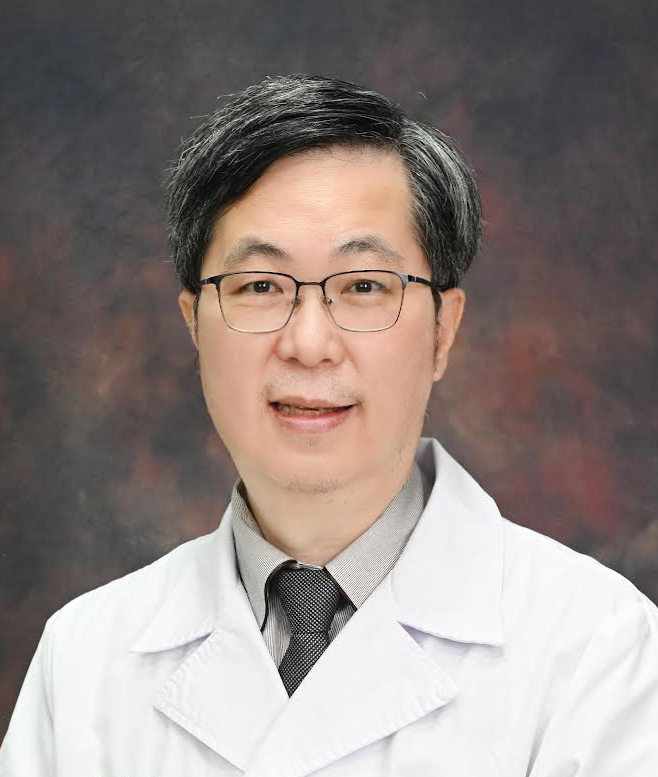
Vin-Cent Wu, MD, PhD, is Professor of Nephrology at National Taiwan University Hospital and Director of Critical Care Nephrology. His expertise spans acute kidney injury (AKI), acute kidney disease (AKD), and continuous renal replacement therapy (CRRT). He founded a 70 000-case AKI/AKD registry and leads several multinational clinical trials, including chairing the 2026 Asia-Pacific AKI-CRRT Conference. Dr Wu has authored over 250 peer-reviewed articles, has been listed among Stanford’s top-2 % scientists since 2020, and has received multiple national awards for research excellence.
18th September 2026 Friday
| Time | Session |
|---|---|
|
16:00
17:30
|
Room 101D
|
19th September 2026 Saturday
| Time | Session |
|---|---|
|
08:30
10:15
|
Jay KoynerUnited States
Moderator
Special lecture: 2026 KDIGO AKI Guideline UpdateI will be updating the audience on the major conceptual updates of the 2026 KDIGO AKI Guidelines. I will focus on Chapter 1 and 2, including the evolving definition of AKI/AKD, AKI trajectories, biomarkers, and risk prediction, together with selected key updates from Chapter 4 on nephrotoxin-associated kidney injuryTargeting Persistent AKI and Promoting RecoveryI have been working with my co-moderators to develop a case based presentation looking at the use of biomarkers to predict outcomes in a patient with dialysis requiring AKI. and we will be discussing the intracicies of providing AKI-care to those receiving dialysis and how best to wean patients from dialysis and the long term outpatient managment of these patients
Room 101
|
|
12:40
13:45
|
VinCent WuTaiwan
Moderator
AKD Care Redefined: Diabetes, Hypertension, and Strategies for Long-Term Health Traditional acute kidney injury (AKI) classifications, centered around semi-anatomical lines, no longer suffice in capturing the complexity of AKI. Subphenotyping, enriched with AKI biomarkers, holds insights into distinct risk profiles and tailored treatment strategies, redefining AKI and contributing to improved clinical management (Critical Care). Incorporating kidney biomarkers into strategies for early AKI detection and the initiation of AKI care bundles has shown greater effectiveness than using care bundles without these novel biomarkers. Our investigations have made notable advancements in identifying water-soluble regulatory iron hepcidin as a promising early biomarker for predicting postoperative acute kidney injury. Beyond hepcidin, our research extended into the exploration of predictive biomarkers, such as HJV, NGAL, and cFGF-23, uncovering their potential in prognosticating the occurrence and severity of AKI (Cell Death Dis, Antioxidants & redox signaling). The amalgamation of these biomarkers with existing clinical AKI scores holds immense promise in revolutionizing critical care and ushering in a new era of personalized patient management. Moreover, our endeavors have transcended theoretical advancements, with successful patent acquisition for AKI biomarkers attesting to our commitment. We were the inaugural contributors to the discourse on the effects of indoxyl sulfate on the tubulogenesis capability of endothelial progenitor cells and cell aging in acute kidney injury(Angiogenesis). A comprehensive review of the long-term prognosis of acute kidney injury, encompassing impacts on the heart, brain, bone lesions, gastrointestinal, and tissue carcinogenesis, was presented. (JASN, KI, cJASN, JAHA, ICM, CC). Our team posited that transferring post-AKI patients to nephrologists for care could reduce overall mortality and cardiovascular events (Value in Health). Through integrated analysis, we demonstrated that standard dialysis would increase the number of patients avoiding dialysis (CC), stimulating fervent discussions among AKI physicians at international conferences. Notably, we were global trailblazers in proposing that acute kidney disease, regardless of AKI presence, leads to mortality and end-stage kidney disease(eClinicalMedicine ).
Although the evidence for patients with acute kidney disease (AKD) is still lacking, several potential pharmacological agents may improve outcomes, including but not limited to angiotensin-converting enzyme inhibitors, angiotensin receptor blockers, mineralocorticoid receptor antagonists, sodium-glucose cotransporter 2 inhibitors, and glucagon-like peptide 1 receptor agonists (JAMA NO). In conclusion, accurate prognosis prediction and effective treatment for AKD are critical yet unmet clinical needs. Future studies are urgently needed to improve patient care in this complex and rapidly evolving field.
Room 101
|
20th September 2026 Sunday
| Time | Session |
|---|---|
|
10:45
11:30
|
Sejoong KimSouth Korea
Moderator
Korean Big-Data Experience in AKI and CRRT OutcomesSouth Korea has established a robust nationwide health data infrastructure, enabling large-scale analyses of acute kidney injury (AKI) and continuous renal replacement therapy (CRRT). Leveraging the Health Insurance Review and Assessment Service (HIRA) and National Health Insurance Service (NHIS) databases, Korean researchers have characterized AKI incidence, risk factors, and short- and long-term outcomes across diverse clinical settings. Studies utilizing CRRT data have identified predictors of mortality, renal recovery, and progression to chronic kidney disease. These big-data approaches provide critical real-world evidence, informing clinical practice and guiding future interventional strategies in critically ill patients with AKI.Precision Volume Management in CRRT: Insights from Bioimpedance and BiomarkersOptimal fluid balance is critical in critically ill patients undergoing continuous renal replacement therapy (CRRT), yet accurate volume assessment remains challenging. Bioimpedance analysis (BIA) offers a non-invasive, objective method to quantify fluid overload and guide individualized ultrafiltration targets. Complementing BIA, emerging biomarkers provide dynamic, real-time insights into volume status and end-organ perfusion. Integrating these tools into a precision medicine framework may optimize fluid removal strategies, reduce complications, and improve survival outcomes in CRRT-dependent patients. Prospective validation of this combined approach is warranted.
VinCent WuTaiwan
Moderator
AKD Care Redefined: Diabetes, Hypertension, and Strategies for Long-Term Health Traditional acute kidney injury (AKI) classifications, centered around semi-anatomical lines, no longer suffice in capturing the complexity of AKI. Subphenotyping, enriched with AKI biomarkers, holds insights into distinct risk profiles and tailored treatment strategies, redefining AKI and contributing to improved clinical management (Critical Care). Incorporating kidney biomarkers into strategies for early AKI detection and the initiation of AKI care bundles has shown greater effectiveness than using care bundles without these novel biomarkers. Our investigations have made notable advancements in identifying water-soluble regulatory iron hepcidin as a promising early biomarker for predicting postoperative acute kidney injury. Beyond hepcidin, our research extended into the exploration of predictive biomarkers, such as HJV, NGAL, and cFGF-23, uncovering their potential in prognosticating the occurrence and severity of AKI (Cell Death Dis, Antioxidants & redox signaling). The amalgamation of these biomarkers with existing clinical AKI scores holds immense promise in revolutionizing critical care and ushering in a new era of personalized patient management. Moreover, our endeavors have transcended theoretical advancements, with successful patent acquisition for AKI biomarkers attesting to our commitment. We were the inaugural contributors to the discourse on the effects of indoxyl sulfate on the tubulogenesis capability of endothelial progenitor cells and cell aging in acute kidney injury(Angiogenesis). A comprehensive review of the long-term prognosis of acute kidney injury, encompassing impacts on the heart, brain, bone lesions, gastrointestinal, and tissue carcinogenesis, was presented. (JASN, KI, cJASN, JAHA, ICM, CC). Our team posited that transferring post-AKI patients to nephrologists for care could reduce overall mortality and cardiovascular events (Value in Health). Through integrated analysis, we demonstrated that standard dialysis would increase the number of patients avoiding dialysis (CC), stimulating fervent discussions among AKI physicians at international conferences. Notably, we were global trailblazers in proposing that acute kidney disease, regardless of AKI presence, leads to mortality and end-stage kidney disease(eClinicalMedicine ).
Although the evidence for patients with acute kidney disease (AKD) is still lacking, several potential pharmacological agents may improve outcomes, including but not limited to angiotensin-converting enzyme inhibitors, angiotensin receptor blockers, mineralocorticoid receptor antagonists, sodium-glucose cotransporter 2 inhibitors, and glucagon-like peptide 1 receptor agonists (JAMA NO). In conclusion, accurate prognosis prediction and effective treatment for AKD are critical yet unmet clinical needs. Future studies are urgently needed to improve patient care in this complex and rapidly evolving field.
Room 101AB
|
|
16:00
17:30
|
Manish KaushikSingapore
Moderator
Patient Selection, Modality, DoseAccess, Membrane, CircuitSevere Hypernatremia and Hyperkalemia in AKI Requiring KRTPrecision Solute Control and Dynamic Dosing with CRRT
Yu-Chang YEHTaiwan
Moderator
Clinical Support Information with Generative AI: Content Generation and Evaluation Generative artificial intelligence is shifting from single-question answering toward structured clinical decision support at the bedside. This lecture presents a practical approach to generating and evaluating AI-derived clinical support information in critical care. On the generation side, we describe a multi-turn conversation and multi-task workflow in which structured patient data, a machine learning mortality prediction model, and SHAP-based explanations are passed sequentially to a large language model through five linked task prompts covering risk interpretation, syndrome identification, current status and diagnoses, recommended examinations, and management suggestions. Each turn inherits the context of the previous one, so the output accumulates into a coherent clinical narrative rather than a set of isolated answers. On the evaluation side, we introduce the IMPACT Framework, a six-domain, 21-item instrument developed through a multinational Delphi consensus involving 58 panelists from 12 countries. Its domains, Integration, Mastery, Precision, Applicability, Comprehensiveness, and Timeliness, allow both clinicians and automated judges to score generated content reproducibly. We share validation results, examples from an intensive care cohort, and lessons learned from iterative prompt refinement. Attendees will leave with a transferable method for building and auditing generative AI support tools in their own units.
Room 101AB
|