
Yu-Wei Chen Taiwan
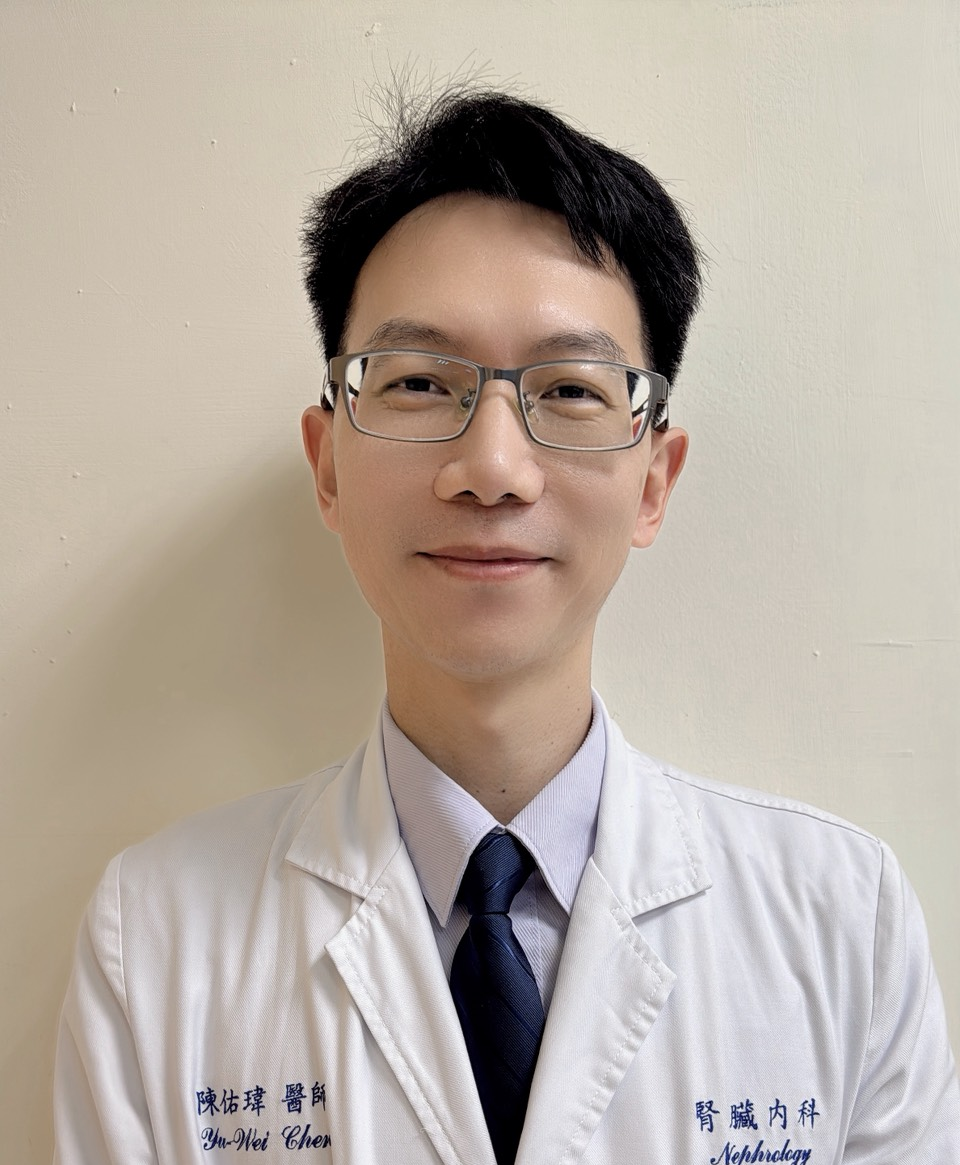
Dr. Tim Yu-Wei Chen is a nephrologist and an intensivist at Taipei Medical University–Shuang Ho Hospital, Taiwan. He received his M.D. from Taipei Medical University and has recently obtained his Ph.D. in the Graduate Institute of Clinical Medicine at Taipei Medical University. He completed his residency training in Internal Medicine and fellowship in Nephrology at Taipei Veterans General Hospital before joining Shuang Ho Hospital as an attending physician in 2015. He has been a visiting scholar at the University of Southern California from 2023 to 2025. He now serves as a clinical faculty member at the College of Medicine, Taipei Medical University, where he is actively involved in undergraduate and postgraduate medical education.
Dr. Chen specializes in nephrology and critical care medicine, with particular expertise in acute kidney injury (AKI), acute kidney disease (AKD), continuous kidney replacement therapy (CKRT/CRRT), extracorporeal blood purification, sepsis-associated AKI, electrolyte and acid-base disorders, and critical care nephrology. As the nephrologist who is responsible for critical care nephrology, he leads multidisciplinary teams caring for critically ill patients requiring advanced organ support and kidney replacement therapies.
His research focuses on acute kidney injury, critical care nephrology, kidney replacement therapy, and the development of digitalized clinical decision support systems. Dr. Chen also conducted translational research about peritoneal dialysis, delineating the association of physical stimuli and peritoneal fibrosis. He has participated in numerous investigator-initiated clinical trials and translational research projects and has presented his work at major international meetings, including the Taiwan Society of Nephrology (TSN) and the American Society of Nephrology (ASN).
Beyond his clinical and research activities, Dr. Chen enjoys engaging diverse audiences and communicating complex medical concepts with clarity, enthusiasm, and professionalism. His experience in public speaking, teaching, and international collaboration has made him a confident and dynamic communicator both on the conference stage and in academic settings.
Dr. Chen has authored and co-authored more than 15 peer-reviewed publications in the fields of nephrology, acute kidney injury, and peritoneal dialysis. His ongoing work aims to bridge clinical practice, biomedical innovation, and digital health technologies to improve outcomes for patients with kidney diseases worldwide.
18th September 2026 Friday
| Time | Session |
|---|---|
|
08:00
12:30
|
(Pre-Congress Workshop)
Room 101C
|
|
18:00
19:00
|
Shotaro MatsumotoJapan
Moderator
The Ultimate Support: Heart-Lung-Kidney Crosstalk and ECMO-CRRT Integration in PediatricsExtracorporeal membrane oxygenation (ECMO) and continuous kidney replacement therapy (CKRT) support pediatric cardiopulmonary failure complicated by acute kidney injury (AKI) and fluid overload (FO). AKI and multiorgan dysfunction are increasingly viewed through bidirectional kidney-lung-heart crosstalk, extending in ECMO/CKRT patients to artificial organs: oxygenator, blood pump, and hemofilter.
Kidney-lung crosstalk shares pathways of vascular rigidity, neurohormonal activation, tissue hypoxia, and aberrant immune signaling. Ventilator-induced biotrauma impairs renal function, while AKI worsens lung injury via fluid, acid-base, and cytokine derangements; positive-pressure ventilation further raises right-ventricular afterload and central venous pressure, reducing renal perfusion. Kidney-heart crosstalk (cardiorenal syndrome type 3) involves analogous inflammatory and neuroendocrine mechanisms and carries a high mortality risk in children.
Beyond native organs, the oxygenator activates complement/inflammatory cascades via blood-biomaterial contact, and non-pulsatile pump flow causes shear-induced hemolysis, with free hemoglobin/iron contributing to AKI. CKRT-ECMO circuit connection requires attention to circuit pressures, embolism risk, and altered drug pharmacokinetics-challenges framed by the multiple organ support therapy (MOST) concept.
Key management priorities include early correction of FO, standardized CKRT-ECMO integration per PCRRT-ICONIC and ADQI/ELSO consensus recommendations, lung-protective ventilation and conservative fluid management, and long-term renal/blood-pressure surveillance after ECMO.
Research has evolved from single-center FO-mortality studies to consensus statements, the extracorporeal organ support concept, and the multicenter WE-ROCK registry, with recent work clarifying molecular mechanisms of sepsis-associated lung-kidney crosstalk. Future work should pursue biomarker-driven endotyping and integrated MOST platforms.Core Decisions: Modality Selection (CVVH / CVVHD / CVVHDF) & PrescriptionModality selection and dose prescription remain unresolved in pediatric continuous kidney replacement therapy (CKRT). Pediatric trials are scarce, so practice extrapolates from adult evidence, while 2026 KDIGO and Surviving Sepsis Campaign updates have reopened debate.
Ronco's 2000 trial established an "at least 35 mL/kg/h" paradigm after showing improved survival with higher ultrafiltration, later refuted by the large ATN and RENAL trials, which found no survival benefit from higher intensity and more complications. KDIGO 2012 therefore recommended a delivered dose of 20-25 mL/kg/h, unchanged in the 2026 draft, which additionally now recommends against high-volume hemofiltration (HVHF) in adult septic AKI, reflecting negative IVOIRE trial and Cochrane review findings.
For modality, CVVHDF has become dominant in the WE-ROCK pediatric registry, rising from 30% to 76% of prescriptions, though some favor CVVH for convective clearance; no modality shows a survival advantage. For dose, the 2026 KDIGO draft newly defines pediatric practice points: weight- rather than surface-area-based prescription to avoid inadvertent infant overdosing, initial effluent of 25-30 mL/kg/h, augmented dosing to 200 mL/kg/h for hyperammonemia, and an ultrafiltration-rate of maximal 2.5ml/kg/h. WE-ROCK data show prescribed doses far exceeding these targets without an observed dose-outcome association.
Adding to this uncertainty, the 2026 pediatric Surviving Sepsis Campaign guideline newly recommends HVHF (>35 mL/kg/h) in septic shock, conditionally and with low certainty, reversing its 2020 position on a fragile three-trial meta-analysis (Fragility Index=1)-contrasting with adult evidence and the concurrent adult KDIGO recommendation against HVHF. Given risks such as dialytrauma and drug underdosing, this fragile signal warrants cautious application.
This session invites participants to weigh this evidence and build a practical framework for individualizing modality and dose decisions at the bedside.
Room 101D
|
19th September 2026 Saturday
| Time | Session |
|---|---|
|
18:00
19:00
|
Nuttha LumlertgulThailand
Moderator
Solution and Fluid BalanceUtility of Lung Ultrasound, VEXUS and Bioimpedance Analysis in Volume Assessment During RRTPersonalized Fluid Management with CRRT
Room 103
|
20th September 2026 Sunday
| Time | Session |
|---|---|
|
12:40
13:45
|
Room 101AB
|